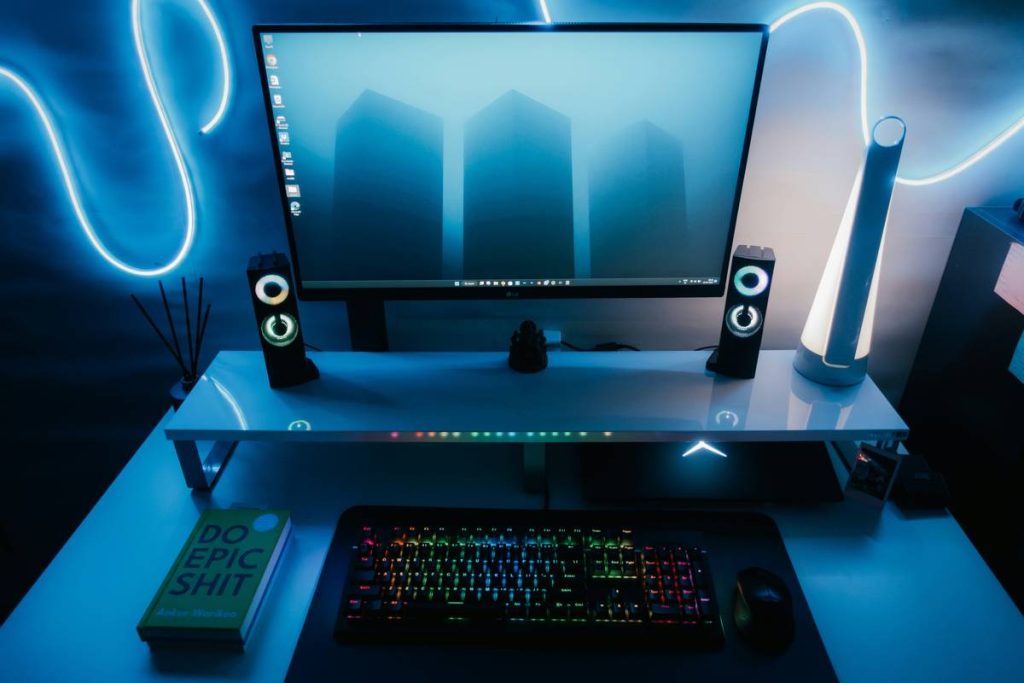
You drop $2,000 on a GPU that renders ray-traced explosions in real time—then pipe sound through tinny, plastic speakers salvaged from a decade-old monitor. The immersion shatters. Every footstep, every distant gunshot, every ambient whisper gets flattened into digital mush. And you wonder why competitive play feels “off.” Gaming speakers for pc build aren’t just accessories—they’re force multipliers.
Most Gamers Get Audio Wrong—Here’s Why
They treat speakers like afterthoughts. Slap on whatever came bundled with the case or reuse office desk junk. Big mistake. Gaming isn’t passive listening—it’s spatial awareness, directional cues, and split-second reaction timing baked into audio. Standard stereo setups miss verticality, depth, and dynamic range. Worse yet, cheap drivers distort during intense scenes, masking enemy movements under bass bloat or treble fatigue.
And latency? Don’t get me started. Bluetooth “gaming” speakers add 100–300ms of delay. In a 1v1 clutch? That’s death.
How to Choose & Integrate True Gaming Speakers for PC Build
Forget plug-and-play junk. Real performance demands intentionality. Here’s how to do it right:
Wired > Wireless (Every Time)
For competitive integrity, ditch Bluetooth. Go USB, 3.5mm analog, or optical. Zero-latency audio keeps your ears in sync with your eyes—critical when tracking footsteps in Valorant or Apex Legends.
Size Isn’t Just About Loudness
Bigger cabinets mean better bass extension without distortion. But desk space is finite. Look for compact 2.1 systems with dedicated subwoofers tucked under desks. You gain low-end rumble for explosions and engine roars without sacrificing screen real estate.
Driver Material Dictates Clarity
Paper cones? Avoid. They warp with humidity and fatigue fast. Kevlar, aluminum, or silk-dome tweeters handle high SPLs cleanly. That means crisp gunfire, not ear-splitting screech.
| Speaker Type | Latency | Ideal Use Case | Avg. Price Range |
|---|---|---|---|
| 2.1 Wired (USB/Analog) | <5ms | Competitive FPS, immersive RPGs | $80–$180 |
| 2.0 Bookshelf (Powered) | <2ms | Mix of gaming & music production | $150–$400 |
| Bluetooth “Gaming” | 100–300ms | Casual single-player only | $50–$120 |
| Soundbar w/ Virtual Surround | 20–60ms | Space-constrained setups | $100–$250 |
The Industry Secret: Most “Gaming” Speakers Are Rebranded Office Gear
Here’s what brands won’t tell you: over 60% of so-called “gaming” 2.0 speaker sets are rebadged versions of corporate conference room hardware. Same drivers. Same tuning. Same flat, lifeless EQ curve optimized for PowerPoint narration—not Dolby Atmos-enabled horror games.
The workaround? Look beyond the RGB-laden shells. Check the spec sheet: frequency response should hit 50Hz or lower without a sub. THD (Total Harmonic Distortion) under 1% at max volume. And if the brand doesn’t publish real-world measurements? Walk away. Real audio engineers test in anechoic chambers—not marketing brochures.
Think about it: your GPU pushes 144+ FPS. Shouldn’t your ears get the same fidelity?
Frequently Asked Questions
Do I need surround sound speakers for gaming?
No—if you use stereo properly. Most games render positional audio via HRTF (Head-Related Transfer Function) over standard 2.0. A well-tuned stereo pair often outperforms fake “7.1” gimmicks.
Can I use studio monitors as gaming speakers?
Absolutely. Flat-response monitors like the KRK Rokit or Yamaha HS series reveal subtle audio cues missed by hype-heavy “gaming” models. Bonus: they double for content creation.
Is a subwoofer necessary for PC gaming?
Not for esports—but yes for immersion. Sub-80Hz effects (earthquakes, dragon roars, mech stomps) add visceral weight. Just ensure it’s adjustable so you don’t drown out critical mid-range sounds.